


Technology Report


|
Auf einen Blick
This article is part of Bain's 2022 Technology Report. After the valuations of multicloud infrastructure software vendors shot into the stratosphere over the past three years only to start crashing down to earth in late 2021, investors and enterprise customers are left wondering, who will survive and thrive? It’s one of the most consequential questions in technology right now, because it has significant bearing on who will win the cloud software market: multicloud infrastructure software vendors (ISVs), hyperscaler cloud service providers, or on-premise originators (see definitions of these three groups in “Cloud Software Competitors” below). Multicloud ISVs’ rapid growth in value indicated an expectation of transformative market penetration and massive revenue growth over the next few years. Indeed, revenue growth of top multicloud ISVs has exceeded that of both hyperscalers and on-premise originators, increasing by a median of 44% from 2019 to 2020 and 50% from 2020 to 2021 (see Figure 1). Their market valuations increased by a median of 157% from 2019 to 2020 and 25% from 2020 to 2021. Some ISVs enjoyed valuations 50 times higher than their annual revenue, more than triple the average software multiple.
Figure 1
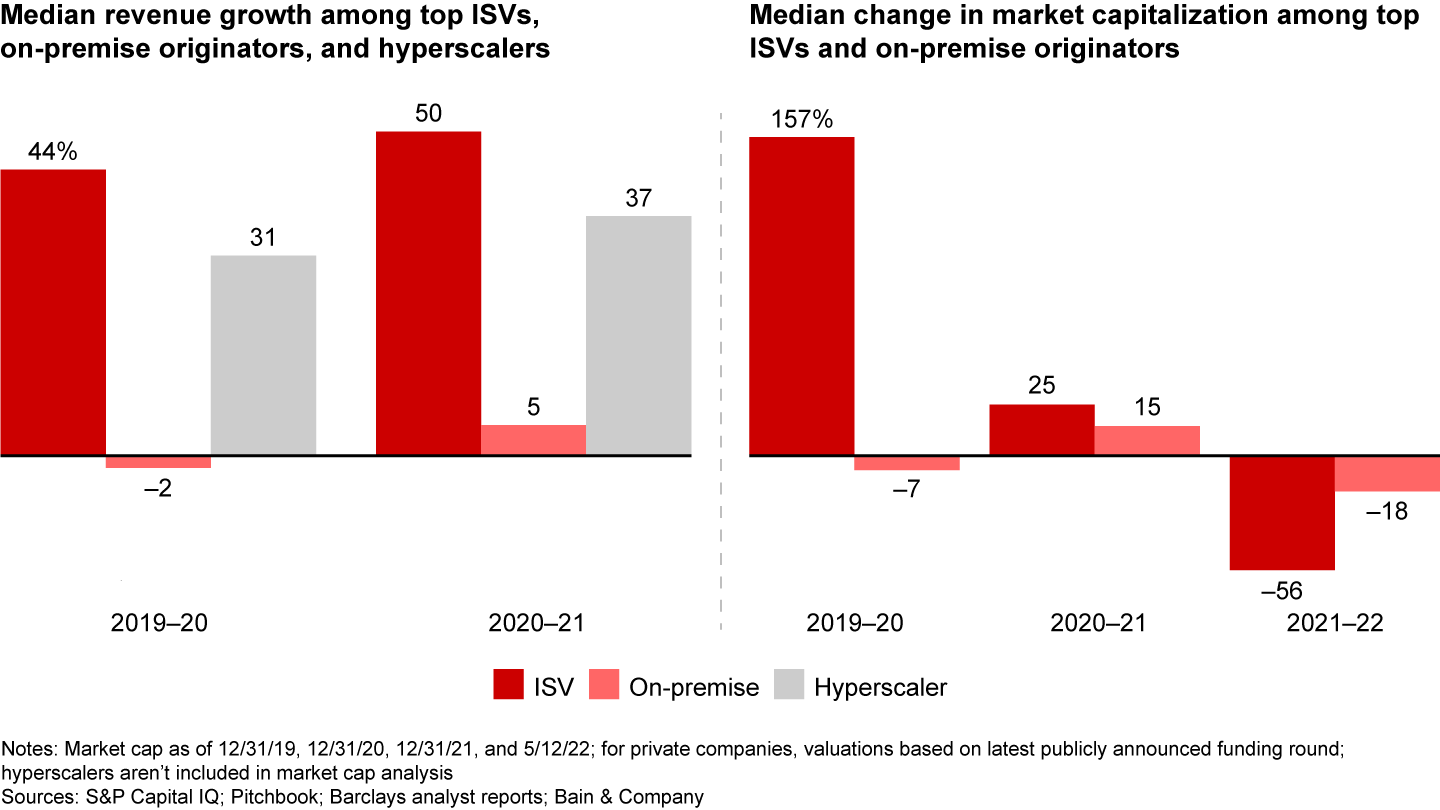

It wasn’t sustainable. As macroeconomic challenges dragged down the stock market overall, multicloud ISV valuations declined even more steeply, even as their revenue growth often exceeded expectations. In time, it will become clear whether this is an overcorrection or a reset that better reflects intrinsic value. However that plays out, it’s increasingly clear that the competition between multicloud ISVs and hyperscalers will determine the future of the cloud software market. As investors and enterprises evaluate their cloud strategies, here’s our guide to what will determine the winners. Three swing factorsThe strength of a multicloud ISV’s advantage in a segment hinges on three characteristics.
Figure 2


The future of ISVsThese three swing factors help clarify when ISVs are better positioned to win, when they’ll face fierce competition from hyperscalers, and when hyperscalers have the advantage.
Implications for ISVs, hyperscalers, and on-premise originatorsAs the cloud services industry matures, multicloud ISVs should play a larger role in the market, but hyperscalers will maintain a strong competitive position, and on-premise originators have an opportunity to carve out their own valuable niche. On-premise originators have two important strengths to draw upon: a large installed base of customers and well-known brand names. Rather than trying to beat hyperscalers, we expect more on-premise originators to form partnerships and invest in making their leading software offerings work seamlessly on top of hyperscalers’ platforms. Critical questions for on-premise originators to consider as they crystallize their strategies:
Successful multicloud ISVs will disproportionately invest in products located further from the hyperscaler core that have hybrid or multicloud requirements and limited benefits from scale. By maintaining a focus on customer needs and delivering best-in-class solutions, they can continue to win. One wild card to watch is regulation. If regulators require more standardization and interoperability, that’s likely to benefit multicloud ISVs. Critical questions for multicloud ISV leadership teams:
The most effective hyperscalers will assess their portfolio of services to determine where their scale delivers a needle-moving competitive advantage and where best-of-breed players have the edge. As their service offerings expand from hundreds today to potentially thousands in the future, hyperscalers will need to effectively manage that complexity while remaining an easy-to-use one-stop shop for customers. Critical questions for hyperscalers:
Value EvolutionCompetitive BattlegroundsOperational AdvantageRead our 2022 Technology Report |