


Rapport


|
En Bref
China’s business landscape is undergoing rapid and unpredictable change due to interconnected forces, including shifts in economic development, evolving consumer confidence, and dynamic geopolitical situations. To compete in this complex environment, many companies are undergoing strategic transformations. Are women being left behind in the turmoil? In this challenging landscape, understanding the status of women in the workplace is more critical than ever. Key questions need to be addressed:
To answer these questions, Bain & Company, in collaboration with Spencer Stuart, conducted its third consecutive study on female leadership in China. This report analyzes the current landscape and challenges women are facing in career advancement. It also proposes actions for organizations and individuals to foster a results-oriented and equitable business environment—one that unlocks the long-term potential of female leaders. Why focus on female leadership and gender diversity?In today’s competitive business landscape, the link between gender diversity, particularly in leadership, and improved business performance is becoming increasingly clear. We analyzed China’s top 300 publicly traded companies on the Shanghai and Shenzhen stock exchanges and found a strong link between gender diversity and company performance: Firms with strong female executive representation outperformed the market in financial performance and key capital market metrics (see Figure 1). This likely stemmed from having diverse teams and open and inclusive environments, which have been cited as improving decision-making and adaptability to changing market conditions.
Figure 1


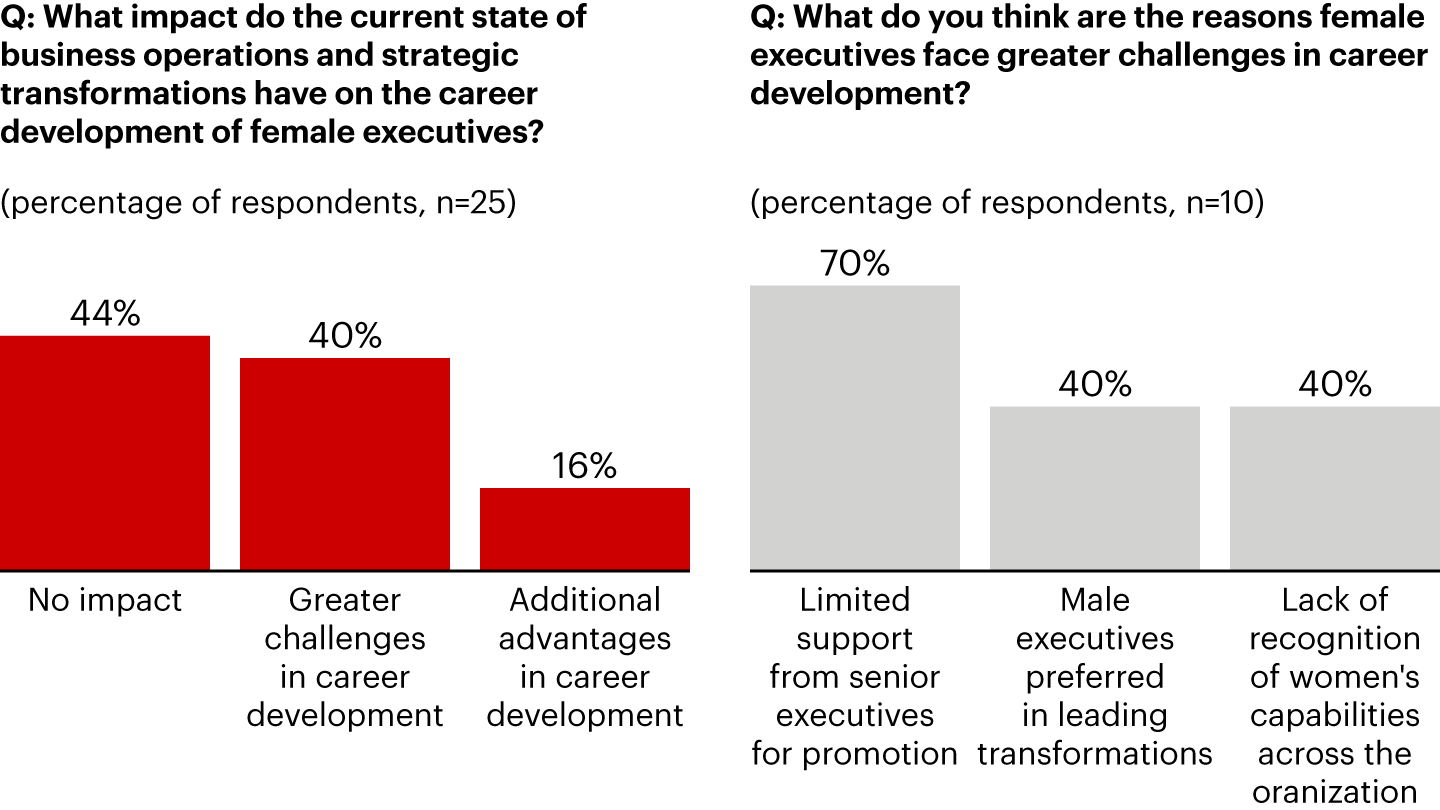
Note: Lagging companies are defined as those with female executive representation below 15%, while leading companies have female representation above 20%; CSI = China Securities Index; EV = enterprise value Sources: Wind; lit. research; Bain analysisThe executive gender gap persistsHowever, female executives in China are experiencing persistent workplace inequalities amid an increasingly complex economic climate. Women hold only 19% of executive positions in leading companies—a figure that has stagnated for three years and lags developed nations such as the US and the UK (see Figure 2). Forty percent of female executives in China said the current state of business and strategic transformations make career advancement more challenging (see Figure 3).
Figure 2
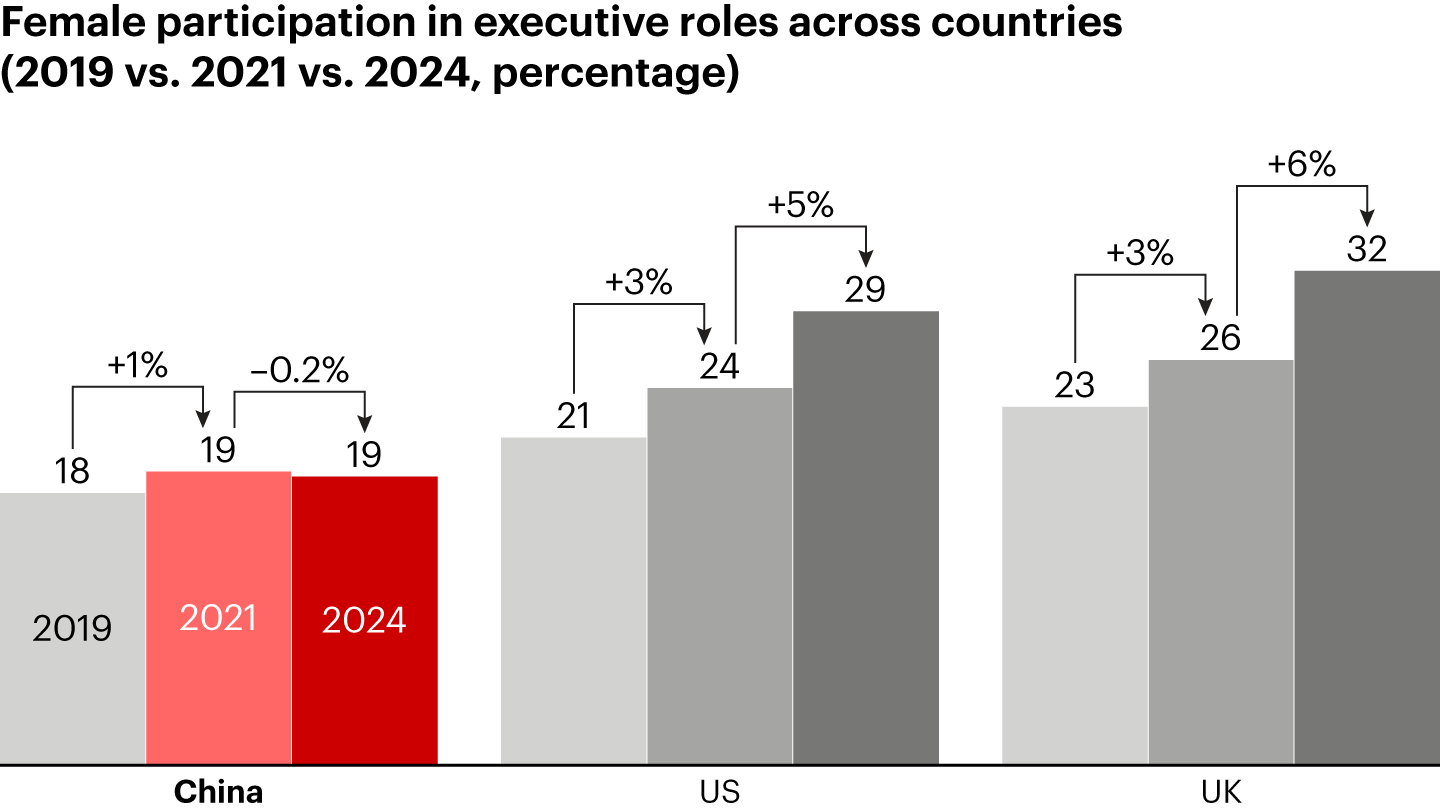

Figure 3

Despite equal educational attainment and entry-level workforce representation, women in China are underrepresented in executive leadership roles (see Figure 4). This “leaky pipeline” indicates systemic issues that prevent qualified women from reaching top positions. When women’s career advancement stalls, it also limits companies’ ability to leverage diverse perspectives toward innovation and value creation.
Figure 4


Women's presence in top decision-making roles has not improved in the last three years (see Figure 5). However, there has been an increase in female CFO appointments, indicating progress in specific areas. Industry trends vary; the healthcare and consumer goods/retail industries have improved female executive representation, while financial services continues to lag.
Figure 5


Note: HR = human resources Sources: Wind; Capital IQ; The Official Board; lit. research; Bain analysisThere are positive indicators in the workforce. For example, in listed companies, newly appointed female executives are younger than their male counterparts. And female CEOs earn slightly higher salaries and stock incentives. However, this may reflect a more selective approach to appointing female executives and an environment where women must overperform to access a limited number of opportunities.
Power moves: Steps to advance women’s careersBoth companies and women themselves should take deliberate steps to overcome systemic barriers that limit female advancement. We analyzed key moments and challenges in women’s careers to create a list of recommendations for each audience. How companies can help close the gender gapWhile many companies have introduced initiatives to promote inclusion and gender equity, they often fall short on implementation and impact. Companies need to build more inclusive leadership and develop competency-based, equitable talent mechanisms to give high-potential female employees opportunities to grow, get recognition, and reach their full potential—and ultimately create more business value. To close the gender gap and improve organization-wide performance, companies can:
Strategic career moves for womenTo maximize their career trajectories, women can:
In addition to these six steps, women should continuously sharpen their skills and embrace new opportunities at every stage of their careers. With appropriate corporate support systems, their investments in professional growth and skills excellence will be recognized and rewarded. ConclusionGender diversity is not just a social responsibility—it's a strategic imperative. It drives innovation, improves company performance, and fosters long-term success. Despite the challenges of a rapidly changing and uncertain business environment, companies must remain committed to implementing these strategies and fully recognizing the contributions of women. This commitment will pave the way for a more equitable and prosperous business landscape for everyone. 
At Spencer Stuart, we know how much leadership matters. We are trusted by organizations around the world to help them make the senior-level leadership decisions that have a lasting impact on their enterprises. Through our executive search, board and leadership advisory services, we help build and enhance high-performing teams for select clients ranging from major multinationals to emerging companies to nonprofit institutions. Privately held since 1956, we focus on delivering knowledge, insight and results through the collaborative efforts of a team of experts—now spanning more than 60 offices, over 30 countries and more than 50 practice specialties. Boards and leaders consistently turn to Spencer Stuart to help address their evolving leadership needs in areas such as senior-level executive search, board recruitment, board effectiveness, succession planning, in-depth senior management assessment, employee engagement and many other facets of culture and organizational effectiveness. |